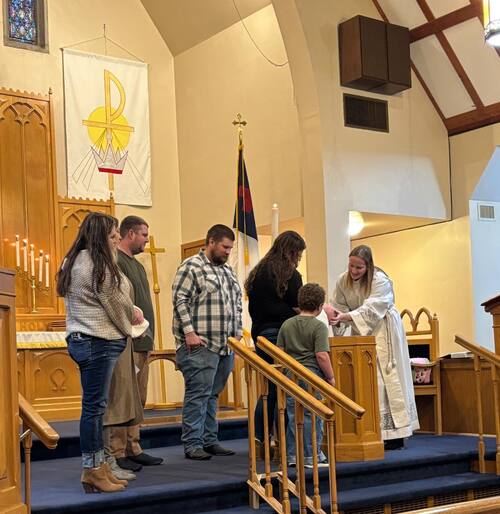
Sunday Morning Worship
We gather weekly to proclaim the death and resurrection of Jesus Christ for the forgiveness of sins. Join us to hear this good and freeing news!
First Lutheran Worships at 9:00am
Pleasant Valley Worships at 10:30am (9:00am in the summer)
Lake City worships at 11:00am (Memorial Day-Labor Day)
First Lutheran Worships at 9:00am
Pleasant Valley Worships at 10:30am (9:00am in the summer)
Lake City worships at 11:00am (Memorial Day-Labor Day)
Liturgy
Prelude - Music that prepares our hearts and minds for worship.
Call to Worship - A short responsive reading that introduces the theme for the day.
Invocation - A proclamation stating that what’s coming next is the Word of God.
Confession - An acknowledgment of our sins.
Absolution - Jesus Christ forgiving sins.
Kyrie Eleison - Latin for “Lord, have mercy.” A short responsive song that asks God for mercy.
Hymn of Praise - A musical expression of joy and praise for Jesus’s redemptive work.
Salutation - The pastor and the congregation bless each other with the Lord’s name.
Prayer of the Day - A prayer that features the day’s theme.
Children’s Sermon - The days message built for our youngest ears.
Readings - A Psalm, an OT reading, and an Epistle reading connected to the day’s Gospel.
The Alleluia - John 6:68 sung in preparation for reading of the Gospel.
The Gospel Reading - A story from Jesus’s life. During the Gospel reading, the congregation stands to symbolize the resurrection from the dead. Short Versicles are sung around the Gospel reading to praise God for his Word.
The Sermon - The application of God’s grace to the congregation.
Confession of Faith - The congregation publicly declares what they believe.
Offering - The giving of financial support to the church. Offerings allow us to efficiently & effectively provide the spoken Word of Jesus.
Offertory - The congregation expresses thanks to God for the blessings he has given.
Prayers of the Church - Prayers for the church, our world, & those in need.
The Lord’s Prayer - The prayer that Jesus taught the disciples to pray.
Benediction - Translated means (good word). We end by sending the congregation out with a good word.
Sending - We leave free in Christ, and thoughtful about what our neighbors need from us.
Postlude - The pianist provides music to see us out.
Call to Worship - A short responsive reading that introduces the theme for the day.
Invocation - A proclamation stating that what’s coming next is the Word of God.
Confession - An acknowledgment of our sins.
Absolution - Jesus Christ forgiving sins.
Kyrie Eleison - Latin for “Lord, have mercy.” A short responsive song that asks God for mercy.
Hymn of Praise - A musical expression of joy and praise for Jesus’s redemptive work.
Salutation - The pastor and the congregation bless each other with the Lord’s name.
Prayer of the Day - A prayer that features the day’s theme.
Children’s Sermon - The days message built for our youngest ears.
Readings - A Psalm, an OT reading, and an Epistle reading connected to the day’s Gospel.
The Alleluia - John 6:68 sung in preparation for reading of the Gospel.
The Gospel Reading - A story from Jesus’s life. During the Gospel reading, the congregation stands to symbolize the resurrection from the dead. Short Versicles are sung around the Gospel reading to praise God for his Word.
The Sermon - The application of God’s grace to the congregation.
Confession of Faith - The congregation publicly declares what they believe.
Offering - The giving of financial support to the church. Offerings allow us to efficiently & effectively provide the spoken Word of Jesus.
Offertory - The congregation expresses thanks to God for the blessings he has given.
Prayers of the Church - Prayers for the church, our world, & those in need.
The Lord’s Prayer - The prayer that Jesus taught the disciples to pray.
Benediction - Translated means (good word). We end by sending the congregation out with a good word.
Sending - We leave free in Christ, and thoughtful about what our neighbors need from us.
Postlude - The pianist provides music to see us out.
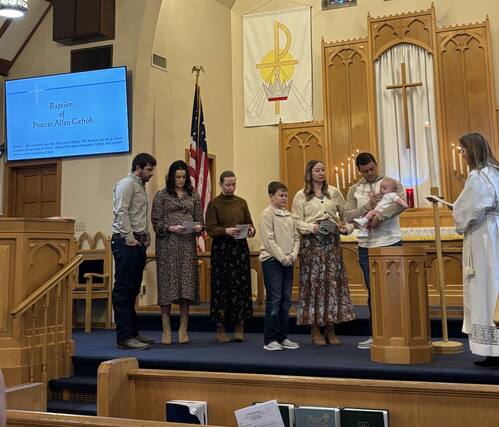
Preaching
“I do not preach: ‘do this, do that’; I preach the forgiveness of sins.” - Martin Luther
Our sermons do not focus on what you are doing or what you should be doing. There are pieces of Scripture that do tell you what to do, that is sure. But, we understand these pieces a little differently than the general body of Christians. We understand that Scriptures that tell us what to do or how to behave are not given for our benefit. They are not given so that we can actually do the tasks listed or improve. They are expressly given so that we understand that we cannot do the tasks that God lays out for us.
So, we cannot and do not look to our own abilities to accomplish what God told us to do. Instead, we confess our inability and sinfulness, and we look to the cross. Instead of taking our try at moral perfection, we understand that Jesus is coming to us with a different route - righteousness not in our actions, but righteousness through the forgiveness of sins. Our sermons are centered on the cross and the redemption that Jesus freely gives to us.
This style of preaching sets us apart. We are unique in delivering a message with no strings attached, no conditions, no obligations, and no human contributions. We preach a pure gift of forgiveness in Jesus Christ. We preach a freeing message.
When we hear this message of freedom, we don’t worry about ourselves. Jesus has taken care of us. So, not chasing our own tails or trying to please God, we expect that we’ll become useful to a few people around us.
Our sermons do not focus on what you are doing or what you should be doing. There are pieces of Scripture that do tell you what to do, that is sure. But, we understand these pieces a little differently than the general body of Christians. We understand that Scriptures that tell us what to do or how to behave are not given for our benefit. They are not given so that we can actually do the tasks listed or improve. They are expressly given so that we understand that we cannot do the tasks that God lays out for us.
So, we cannot and do not look to our own abilities to accomplish what God told us to do. Instead, we confess our inability and sinfulness, and we look to the cross. Instead of taking our try at moral perfection, we understand that Jesus is coming to us with a different route - righteousness not in our actions, but righteousness through the forgiveness of sins. Our sermons are centered on the cross and the redemption that Jesus freely gives to us.
This style of preaching sets us apart. We are unique in delivering a message with no strings attached, no conditions, no obligations, and no human contributions. We preach a pure gift of forgiveness in Jesus Christ. We preach a freeing message.
When we hear this message of freedom, we don’t worry about ourselves. Jesus has taken care of us. So, not chasing our own tails or trying to please God, we expect that we’ll become useful to a few people around us.